miércoles, 16 de mayo de 2012

Did Darwin Really Kill God ?


  I wonder what Dawkins was thinking right before he sat down to write chapter two. I can’t imagine how many outlines, concept maps, lists and other things he did to organize his thinking. I can imagine him sitting down in his office saying to himself “OK, now I get to explain the most difficult and controversial topic ever known to man in one chapter.” Its own existence. All of us and all of the other people in the world have been kids. When we are kids there is a moment in our life in which we ask questions about everything. We walk around and asking mommy why is the sky blue? Mommy, why can horses eat grass? etc. As we continue to grow up we are given a correct and precise to all of our questions. All of them except two “Why am I here?” and “How was all this created?” For these questions we only get theories, like the one proposed to us by Dawkins in this chapter.
I always thought I understood Darwin's theory of evolution. After this chapter I realized that I was mistaken and that Darwin's theory  is extremely more complex that I thought. I really had no Idea that: “The precise thorn bush shape of a protein molecule such as Hemoglobin is stable in the sense that two chains consisting of the same sequences of amino acids will tend, like two springs to come to rest in exactly the same three dimensional pattern.”
I am Catholic. Therefore, I am expected to be in complete disagreement with both Dawkins and Darwin. However I am not. I don't believe that God created the world in seven days. I believe in Darwin's theory of evolution, or as Dawkins explains it, “the survival of the stable.” People say Darwin killed religion. I believe Darwin enhanced religion.The process that Dawkins explains in chapter two is by far the most complex that I have ever heard of. Now I ask myself how could anybody believe that such a complex process could occur out of pure luck? I agree with Dawkins in all of his process and I believe that as he himself said it, he is not to far away from the truth. However I can’t agree with him when he says things like “At some point a particularly remarkable molecule was formed by accident. We call it the replicator. It may not necessarily have been the biggest or the most complex molecule around, but it had the extraordinary property of creating copies of itself.” Dawkins himself says his book isn't intended to question religion. But I do question Dawkins, do you really believe that the miracle of such a molecule like the replicator being formed is an accident? That the replicator,  having extraordinary property of creating copies of itself, was simply a coincidence? I simply cant believe that.

sábado, 25 de febrero de 2012

My Pursuit Of Happines

As I finished Candide Voltaire's critic was clear.He talked about how in life we weren't suppose to stop and think about things like: why is their evil in the world? We should simply continue to work no matter what because it wasn't our business it was Gods business. We humans were simply brought to this earth to work , thinking about other things would be a waste of time.Voltaire is criticizing how the church wants people to think about life as something temporary that dosent last.He criticizes how the church asked the people not to complain or worry about the bad things that happen to them, but to simply trust God and his judgment and accept that it is all for the best.
I have always thought that one of the side topics or critics of Candide is the pursuit of happiness.All through out the book most of the characters are searching for happiness.The characters as we all know only face catastrophes and disgraces one after an other.How ever this dosent stop them from continuing to pursuit happines. 
As I finished the book I started to think about my beliefs(I am a very catholic person).I noticed that every time something bad happens to me there is nothing that helps me feel better than knowing that God is looking after me and that this was all for the best.Despite me reading this book I still believe this is true.My aunt once told me this story about a girl who never believed in God.One day she had a very important business meeting since she felt nervous she went to mass before going to the meeting.As she was coming out of the church she was in a car crash.Her car was trashed and she never even got to the meeting because she had to stay there and solve things with the other person involved in the  crash.after a whole afternoon of figting with the other driver and seeing her beloved car being trashed she finally arrived home.She was exhausted and went to sleep.That night in her dreams God appeared and spoke to her and said “My beloved dont be mad this morning as you were leaving for the meeting there was a big Land slide in the road that you were going to take since you were hit by that car you weren't able to take that road however if you had you would have died.”The girl woke up sacred and turned on her radio to here in the morning news how there had been a huge land slide in the road that she took every morning to work.
What ever Voltaire might have thought I truly believe than everything in this world happens for the best.I also believe that no matter how hard life hits us or how many tragedies we have to face nobody or anything has the power to take away our right to pursuit happiness.

Oh My Love My Beautiful Darling


To be sincere I haven't really found Voltaire's exact critic in respect to lady Cunegonde.How ever what I would like to write about is the theme that lady Cunegonde inserts into the story.The ever lasting love in between the brave man and the innocent women.The long nights staring at the stars with out wanting to sleep but only to think of that beautiful mistress that awaits for them.The difficult moments when the only thing that keeps them going is the thought that one day they may hear her voice again.This is a recurring theme in the text as Candide himself spends most of the book thinking on when and were he will once again meet his so cherished love.
I have seen this theme in many other books ,movies, poems and songs.The reason why is because we humans are fascinated by this theme.In every culture there is always a way in which love is expressed.Love as first sight, eternal love etc these are topics that all go down to this central theme.
I would like to compare Candides love for lady Cunegonde with Don Quijotes love for Dulcinea they are both pretty similar.They both qualify for the standards that I was previously describing.Both Candide and Quijote spend the whole book thinking about there everlasting love.How ever in both books we don't get to learn much about the mistresses. The characters describe them every chapter or so, how ever all they talk about is how beautiful and innocent they are, and how they cant wait to finally meet with them. 


Something that I found pretty funny was the fact that both lady Cunegonde and Dulciena turn out to be ugly.Its funny because throughout the whole book (both books) I had this mental image of Lady Cunegonde  and of Dulciena.I thought they were the most beautiful princess in the world.Don Quijotes and Candides everlasting description are all turned down by the narrator saying “but what is sadder still is that she has lost her beauty and has become terribly ugly”pg 129 .That is all it takes for me to erase the perfect image that I had for both mistresses that image that was so carefully woven into my mind  by Candide and Quijote.


lunes, 20 de febrero de 2012

El Dorado The Voltarian Utopia

As I was reading through chapter eighteen of Candide I began to reflect on “El Dorado”.The first thing that came to my mind was El Dorado international airport or otherwise known as the ugliest airport in the world. Man I just cant stand that rusty motel like sign that all of our tourist see when they arrive to the country.
Then I was reminded of the Movie “The Road To El Dorado” Its a short cartoon movie about two guys named Tulio and Miguel who want to find the lost city. Eventually they do find the City. What I have found interesting is that both the movie and Voltaire portray El Dorado as a utopia. In the movie the two main characters are thought to be Gods therefore treated as if as thought they were. At the end of the movie Hernan Cortes the famous “conquistador” tries to invade the city but fails. Tulio and Miguel, who wanted to extract all of the gold from El dorado and take it back to spain, end up not doing so.This is interesting because Miguel and Tulio thought el Dorado was so perfect that they decided to leave it the way it was rather than taking all the gold away form the city.This compares to Candide  because both in the movie and in the book they talk about El Dorado as a utopia.
A I kept on analyzing Voltaire's el Dorado and the Movie,I became certain that they were both Utopias. Then I asked myself, why is Voltaire making fun of south America? Why would  a french man criticize South America? Then it became evident to me that Voltaire wasn't making fun of South America but of this idea of a perfect world. All throughout the book, characters have to suffer and suffer and they are told that its all for the best. In el Dorado people live up to a hundred years; they have no worries and they live a calm and great life. El Dorado was only a legend, it didn't actually exist and that is what Voltaire is trying to say; that there is no such thing as a Utopia it is simply a vague and vague legend that a perfect world exists just like el dorado.

There Is No Need For Irony In This One

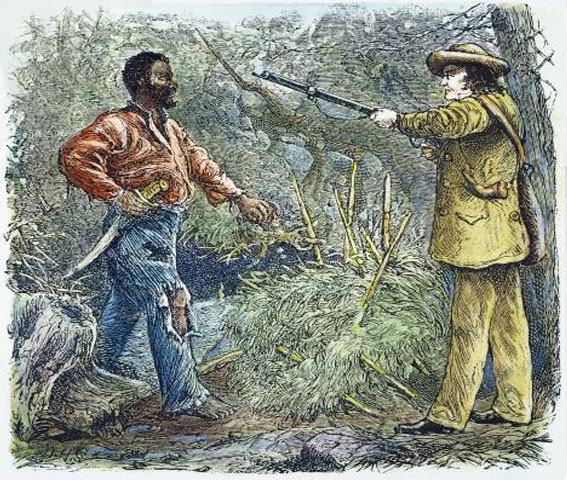
Voltaire was very recognized for being a man who  protected and imposed human rights. For this reason, it was no surprise to see him criticize slavery in chapter XIX. Voltaire describes the miserable conditions in which Candide finds a salve as he is entering Suriname. Voltaire, of course, criticizes how cruelly these slaves were treated. 
The slave that Candide found missed a leg and therefore could not run away and did not have a hand for slipping up. These were clear examples of how Voltaire was disgusted by slavery. Voltaire also criticizes how pathetic the excuses were for slavery. Slave owners were religious so they were suppose to believe that all men are equal in Gods eyes. However, they didn't treat the blacks as is as though they were equal. 
What was even more ridiculous was that they taught their slaves their religion. Every day they talked to their slaves about how only god took and gave life,how they should respect each other and love each other and most ridiculously about how all men were equal. However this didn't stop the slave owners from taking away a slave’s hand or leg. Voltaire didn't need to make this one neither Ironic nor pathetic as it already was in reality.

Its funny that I read exactly this chapter today because in US History we were talking about slavery. I was reminded of the Movie Amistad; The movie is about how some african salves are being taken to Cuba to be sold. However the slaves manage to take over the ship. The salves sail all the way to America where there is this big dilemma on what they should do with the salves. There are many theories proposed by many people that claim them theirs. Some other people think the salves should be granted freedom.The movie compares to Candide in the sense that they both portray the slave situation as pathetic. In the movie it is pathetic that the decision that the court takes, which is supposed to be based on the US constitution which says “all men are equal”, is to enslave the africans.
Overall I believe that Blacks have suffered a lot and that its definitely pathetic the excuses that they made up to treat people this poorly.

domingo, 12 de febrero de 2012

Every Detail Counts

“Candide trembled like a philosopher ,and hid himself as best he could during this heroic butchery”pg 25.It just keeps on going.Paragraph after paragraph, Voltaire continues to delight us with his incredible hyperbolas.With his Ironic phrases and with his hidden messages.Its been a delight to read these first four chapters of Candide.Every time I finish a sentence I have to stop for a couple of seconds and think about what Voltaire is trying to tell me .Once I figure it out , it brings a smile to my face as I discover the Irony of each sentence.Reading this book has  been very interesting. I often find myself close reading paragraphs again and again.As I try  to find Voltaire's hidden message.This is certainly not a literary book in which the author writes what he wants to say.In this book, I must pay attention to every detail, every paragraph ,every sentence ,every word.
         Candide reminds me so much of the TV series Prison Break.In which every little detail has an important meaning that will be explained in flash backs or in the future.For example at the beginning of the series Michael ,the main character, bumps in to his Dad.He only realizes at the end of season one ,that that guy that he bumped into was his Dad.It surprises you because something as insignificant as bumping in to somebody, turns out to be the most important thing in the whole season.So after this, every time I watch prison break, I pay attention to every little detail.Its the same with this book.Its like watching a suspense movie in which you  don't know what the character is going to do.Its just that in Candide its not about what the main character is going to do its how the narrator is going to describe Candide doing it.I have found it pretty interesting and unique to read this book and I hope it keeps on going this way.

The Honorable and Loyal six foot Heroes

Since Voltaire has gone ahead an utilized so much Irony in Candide .I have gone ahead and created an Ironic title.The Title of course has to do with the description Voltaires “Heroes” in the book.
The Heroes as we all know are the soldiers of the  “Bulgar army”.Voltaire is of course criticizing them  through Ironic phrases such as “Girls who had satisfied the appetites of several Heroes lay disemboweled in their last agonies”pg 26.Voltaire seems to be disgusted by the sobriquet that is given to soldiers as Heros.All through chapter four, Voltaire describes the atrocities committed by these Heros.It is evident that Voltaire feels that soldiers are abusive and and are given to much merit for there corrupt labor.
What I have found Ironic or to be more specific interesting is that 234 years after Voltaire's death this sobriquet of “Heroes”is still given to soldiers.These “Heroes” of today aren't much more different than the ones back then and I think that Voltaire would continue to be disgusted at the modern day heroes.Every now and then their are scandals of how in Iraq American soldiers were found torturing prisoners.In Colombia The whole “Falsos Positivos” scandal  brought to light how many of the so called “Heroes” would kill innocent men to simply get more vacation time our money.It isn't rare to hear that soldiers rape and kill innocent women.I imagine what Voltaire would feel knowing that 200 years later things haven't changed.
This discussion about Soldiers has also reminded me of the Colombian Movie el Paramo.The Movie is mainly about some Colombian soldiers who loose communication with their base so they end up in a “Paramo” which turns out to be hunted.In the Moive they show a lot of the atrocities committed by soldiers in poor and isolated regions such as these.They show how they rape and kill innocent people.The characters of El Paramo fit the description of Voltaire's “Heros”.So this is what seems Ironic again that after 200 years have passed and we have supposedly advanced and evolved so much the things that disgusted a man in the 1700s still disgust a man 200 years later.
Here you can watch the trailer of El Paramo http://www.youtube.com/watch?v=BfPBT-RWtLU